When Drupal Architecture Becomes the Bottleneck
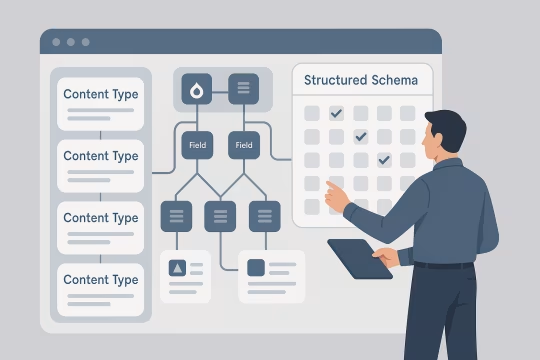
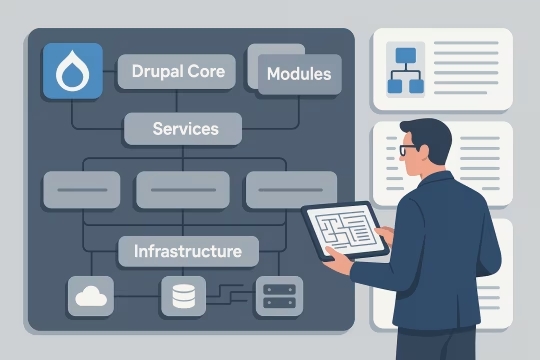
Many enterprise Drupal platforms struggle not because they lack features, but because the underlying Drupal technical architecture was never designed for enterprise scale. As teams add brands, regions, and channels, a weak Drupal system design leads to inconsistent patterns across sites, duplicated configuration, and unclear ownership of content models and shared components.
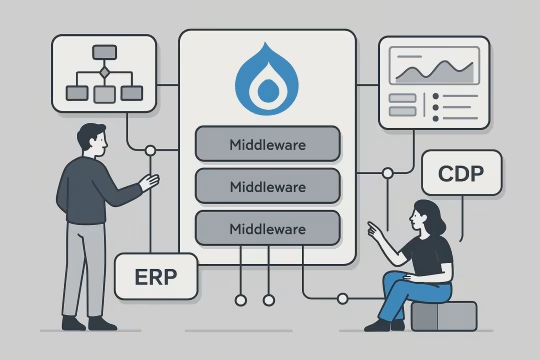
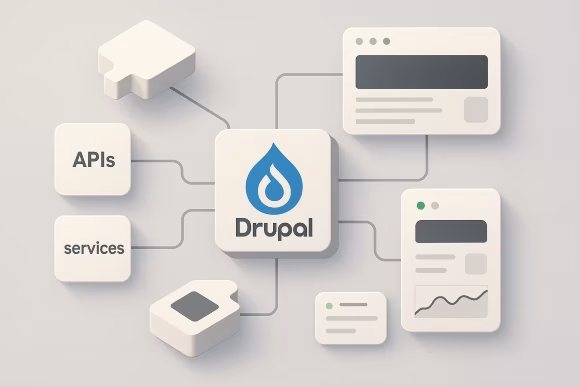
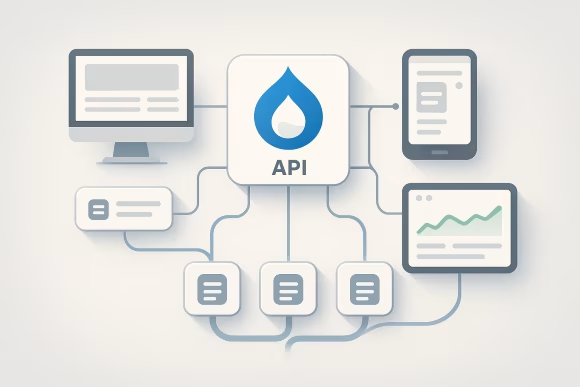
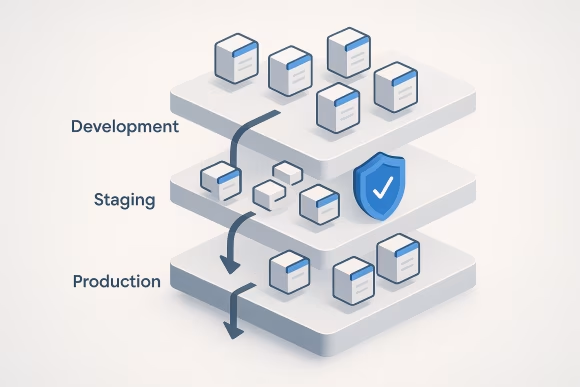
Over time, over-customized modules, ad hoc theming decisions, and unmanaged integration points create structural entanglement. When integrations to CRM/ERP/CDP, search, or identity providers are implemented without clear boundaries, changes in one area cascade into others. This fragmentation increases maintenance overhead, complicates upgrades, and makes it difficult to enforce governance, security controls, and compliance requirements consistently across environments.
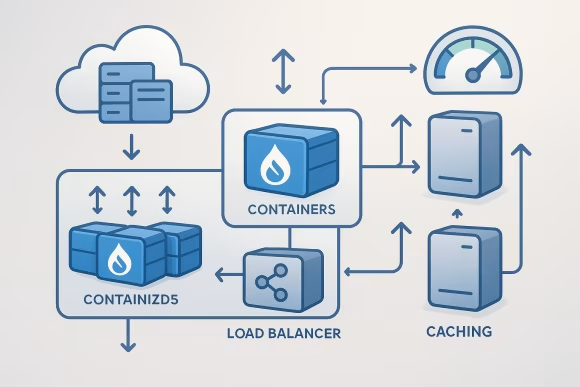
As complexity grows, performance tuning becomes reactive, deployments slow down, and scaling becomes risky—especially in multisite and composable setups where shared foundations must remain stable. Without a coherent enterprise architecture, each new feature or site launch increases operational risk, extends delivery timelines, and accelerates technical debt.









 [01]
[01]