



 [01]
[01]Immediate Intake
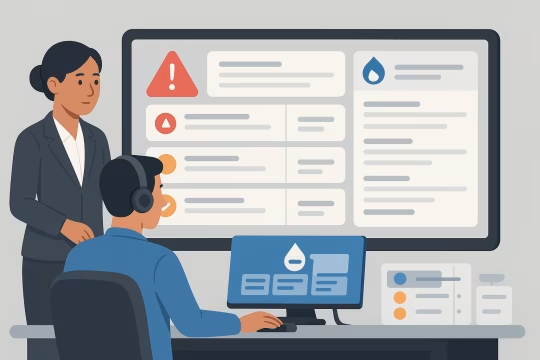
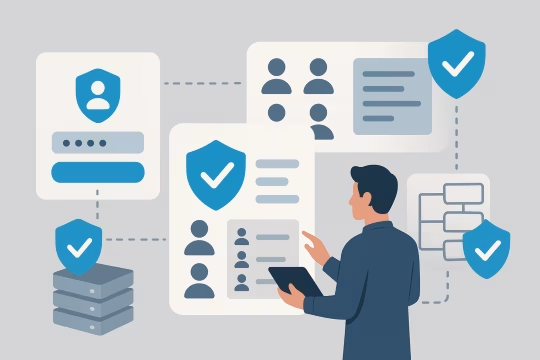
You contact us through an emergency channel and describe the issue, impact, and urgency level. We immediately classify the incident, define severity, and initiate structured response procedures without delay.
Drupal incident response
Use a Drupal health check to uncover failure patterns across code, hosting, caching, deployments, and integrations before production risk escalates.
Ideal after outages, failed releases, security events, or unstable Drupal operations.
No login required. Takes 2–3 minutes.
When your Drupal site is down, compromised, or behaving unpredictably in production, every minute matters. Our Drupal Incident Response service provides 24/7 Drupal support with immediate, senior-level technical intervention to stabilize your platform, protect data, and restore normal operations as quickly and safely as possible. If you need a Drupal website down fix, Drupal downtime support, or an emergency Drupal developer to triage a critical failure, we help you regain control fast.
This service is designed for high-pressure situations where rapid diagnosis, calm execution, and deep Drupal production support expertise are essential—including Drupal security incident response and Drupal outage recovery.
Drupal incidents rarely happen in isolation. A sudden outage, failed update, broken deployment, security breach, or data inconsistency can cascade across caching layers, integrations, and infrastructure—impacting revenue, reputation, and internal operations immediately. When a Drupal website goes down, teams often face incomplete signals (partial logs, noisy alerts, unclear recent changes) and must make high-stakes decisions under time pressure.
In these moments, ad-hoc troubleshooting and trial-and-error changes increase operational risk. Quick fixes applied directly in production can introduce new regressions, widen the blast radius, or mask the real failure mode. Common symptoms—like a Drupal white screen of death, fatal PHP errors, or post-deploy configuration drift—can be caused by multiple interacting factors, making it hard to distinguish application defects from infrastructure or dependency failures.
Security events add another layer of complexity. A suspected compromise can require containment, access review, and careful validation of what changed and what data may have been exposed. Without disciplined incident management, organizations can lose time, lose evidence, and prolong downtime—turning a recoverable disruption into a recurring reliability and governance problem.
Immediate triage to understand impact, scope, and risk.
Stop the bleeding before attempting deeper fixes.
Targeted fixes with minimal blast radius.
Check for compromise, vulnerabilities, and data exposure.
Transparent updates during every phase of the response.
Concrete recommendations to prevent recurrence.
Drupal Incident Response provides structured, high-priority Drupal support for stabilizing business-critical platforms under pressure. It combines disciplined triage, controlled remediation, Drupal security incident response, deployment recovery, and performance diagnostics within incident-tested engineering workflows. The focus is on restoring operational continuity while protecting data integrity, release governance, and architectural consistency. Root-cause analysis and targeted safeguards help reduce repeat incidents and ongoing maintenance overhead.

White screens, fatal errors, broken releases, or infrastructure failures can immediately disrupt business operations. We rapidly diagnose the root cause, restore availability, stabilize the environment, and implement safeguards to prevent recurrence while minimizing downtime impact—including when you need a Drupal website down fix.
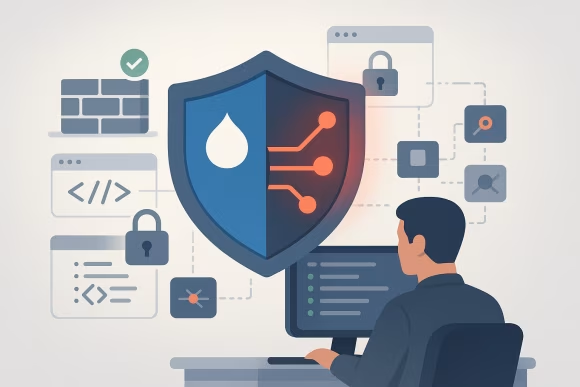
Hacked sites, malware injections, suspicious behavior, and unauthorized access require structured containment and remediation. We isolate the threat, secure compromised components, patch vulnerabilities, and harden the platform to restore trust and operational safety—including Drupal hacked website recovery and Drupal malware removal services when applicable.
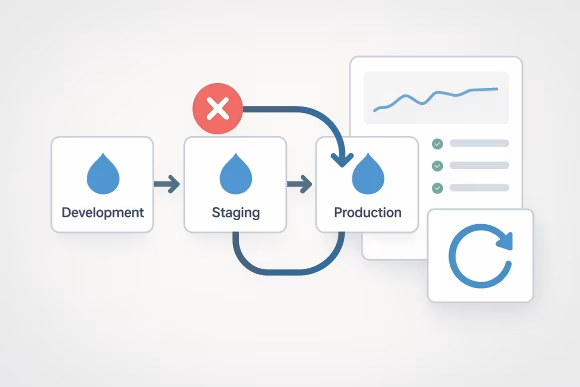
Broken CI/CD pipelines, failed configuration imports, and unstable releases can block delivery or disrupt production. We analyze deployment logs, correct pipeline misconfigurations, perform safe rollbacks when necessary, and re-establish a stable release workflow—including help to fix a Drupal site after a failed update.

Sudden slowdowns, traffic spikes, caching failures, or infrastructure bottlenecks can severely impact user experience. We investigate performance metrics, optimize caching layers, adjust scaling strategies, and restore system responsiveness under real-world load conditions.
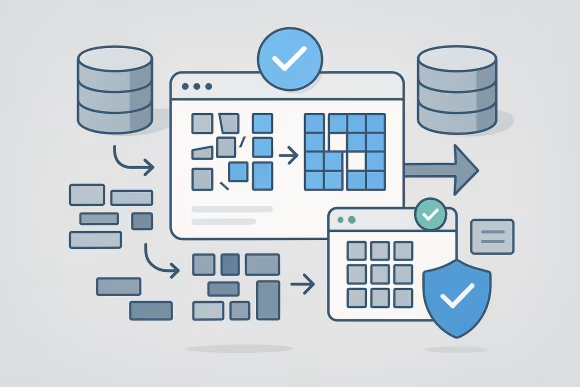
Corrupted content, failed migrations, sync errors, or inconsistent data structures require careful validation and recovery. We audit affected datasets, restore backups where needed, repair structural inconsistencies, and implement safeguards to protect data integrity moving forward.
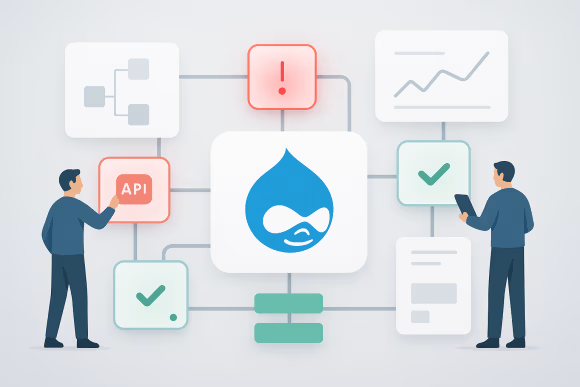
APIs, integrations, or external services can introduce instability when dependencies fail or change unexpectedly. We isolate integration issues, apply fallback strategies, restore stable connections, and reinforce monitoring to reduce dependency-related risks.
We pinpoint the technical and operational issues behind recurring Drupal incidents so your team can prioritize fixes with confidence.
Our Drupal Incident Response delivery model is a clear engineering sequence—from intake and access through live investigation, stabilization, verification, and documented follow-up. It is designed for urgent support scenarios where Drupal downtime support, safe change control, and fast coordination with your team are required. The emphasis stays on controlled recovery in production and reducing the risk of repeat incidents.
[01]You contact us through an emergency channel and describe the issue, impact, and urgency level. We immediately classify the incident, define severity, and initiate structured response procedures without delay.
 [02]
[02]We securely obtain required system access and gather critical context, including recent deployments, infrastructure changes, and monitoring logs. This ensures we begin investigation with complete technical visibility.
 [03]
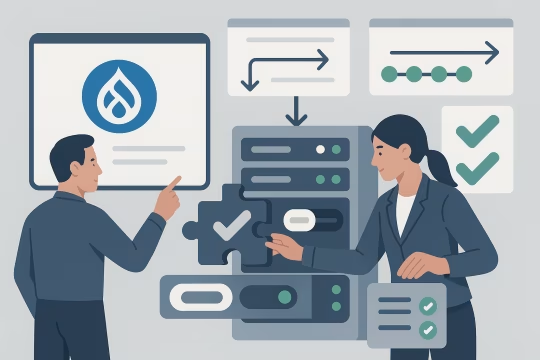
[03]Senior Drupal engineers perform hands-on diagnosis directly in production or staging environments. We analyze logs, performance metrics, error traces, and integration signals to rapidly identify the root cause.
 [04]
[04]Controlled fixes are applied to restore service safely. This may include hotfix patches, configuration corrections, cache invalidation, rollback procedures, or infrastructure adjustments.
 [05]
[05]After remediation, we confirm platform stability through functional testing, monitoring validation, and performance checks to ensure services operate normally and securely.
 [06]
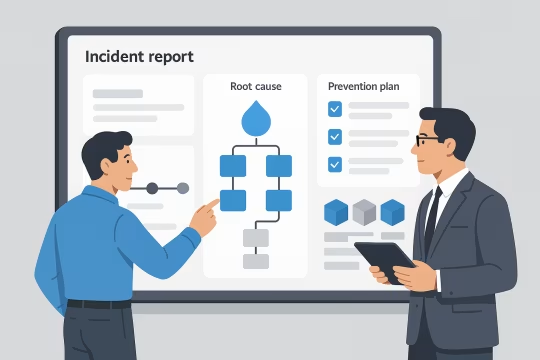
[06]We provide a clear incident summary outlining root cause, actions taken, business impact, and prevention recommendations. This ensures transparency and reduces the likelihood of recurrence.
Rapid and controlled incident response directly protects revenue, customer trust, and operational continuity. Faster recovery times reduce the financial impact of outages while preventing secondary failures caused by rushed or unstructured fixes. Structured containment of security and deployment incidents lowers regulatory and reputational risk. Clear diagnostics and documented remediation provide leadership with transparency during critical moments. Over time, disciplined post-incident analysis improves platform stability and reduces the likelihood of recurring disruptions.
Structured triage and experienced engineering intervention shorten recovery time, limiting revenue loss and customer disruption during critical incidents.
Controlled remediation prevents cascading failures and avoids introducing new instability while resolving high-impact production issues.
Senior Drupal engineers handle complex outages and security events, ensuring calm, methodical decision-making during high-stress situations.
Each incident concludes with documented findings and clear preventive recommendations, turning crisis moments into long-term stability gains.
Root cause analysis and corrective safeguards reduce recurrence, strengthening architectural resilience and operational predictability.
Drupal operations readiness
Get a focused view of Drupal weaknesses across updates, infrastructure, integrations, and release practices before they trigger another production issue.
Incident response is most effective when supported by strong operational practices and a resilient platform architecture. These related services help organizations strengthen infrastructure reliability, improve security posture, and establish long-term operational stability for Drupal platforms. Together they reduce the likelihood of future incidents while improving response readiness and platform governance.
Keeping Mission-Critical Drupal Platforms Stable with Ongoing Drupal Support
Automated Deployments. Reliable Infrastructure.
Speed Is Not a Feature. It’s Infrastructure.
Prometheus Grafana Drupal monitoring with metrics, logs, and alerting
Automated CI/CD Pipelines. Reliable Infrastructure.
Enterprise Drupal uptime engineering through resilient infrastructure design
Kubernetes Drupal infrastructure design for Drupal workloads
Enterprise Drupal Technical Assessment & Drupal Health Check
Ongoing Drupal Support Retainer for Enterprise Teams
Drupal Incident Response is built for high-pressure situations where production stability, security, and business continuity are at risk. This FAQ answers common questions about 24/7 Drupal support, enterprise Drupal incident management, containment steps for security events, and what to expect during Drupal outage recovery. It also covers practical engagement topics like access, coordination, risk control, and post-incident follow-up.
A Drupal incident typically involves a production outage, security breach, severe performance degradation, failed deployment, or data integrity issue that impacts business operations. If the platform is unavailable, compromised, or behaving unpredictably in production, it qualifies as a critical situation. Emergency Drupal support is appropriate when internal teams cannot safely diagnose or stabilize the issue within acceptable business timelines. The objective is immediate containment, risk reduction, and controlled restoration of service.
Response speed depends on availability and intake channel, but emergency engagements are prioritized for immediate triage. Initial acknowledgment and investigation begin as soon as access and impact details are confirmed. The focus during the first phase is rapid assessment of severity, scope, and potential security implications. Stabilization actions are implemented quickly, followed by structured remediation to restore full functionality without introducing additional risk.
Yes. Drupal Incident Response is designed to complement internal teams rather than replace them. Collaboration includes log sharing, infrastructure access, deployment history review, and coordinated communication. Clear role definition is established early in the process to avoid duplication or conflicting actions. This ensures efficient containment, faster diagnosis, and controlled decision-making during high-pressure situations.
Security incidents follow a structured containment and remediation process. The first priority is isolating compromised components, limiting exposure, and preserving forensic evidence where necessary. Once contained, vulnerabilities are patched, permissions reviewed, and affected integrations validated. Post-incident analysis identifies the entry point and corrective safeguards to prevent recurrence. The approach prioritizes both immediate protection and long-term hardening.
Yes. Emergency Drupal support can include legacy environments such as Drupal 6 or Drupal 7. Many production platforms continue operating on older architectures and still require rapid stabilization during outages. While long-term modernization may be recommended, incident response focuses on restoring availability safely within the constraints of the existing architecture. Risk boundaries and technical limitations are assessed before implementing corrective actions.
Incident response follows a stabilization-first methodology. Rather than applying broad changes under pressure, targeted interventions are implemented with minimal blast radius. Wherever possible, backups are secured, configuration snapshots are preserved, and rollback paths are defined before remediation. This disciplined approach reduces the risk of cascading failures and ensures that short-term fixes do not compromise long-term platform integrity.
Once service is restored, the focus shifts to root cause analysis and prevention planning. A structured summary outlines impact, actions taken, and technical findings. Recommendations may include architectural adjustments, security hardening, deployment workflow corrections, or monitoring improvements. The objective is to transform an emergency event into an opportunity to strengthen long-term platform resilience.
Yes. After emergency stabilization, organizations often transition to structured SLA-based support or proactive retainer models to reduce future risk. Continuous monitoring, severity-based response agreements, and preventive maintenance frameworks help prevent recurrence of similar incidents. This structured follow-up improves operational predictability and lowers exposure to repeated production disruptions.
Before applying corrective actions, system state and database conditions are evaluated carefully. Where necessary, backups are secured and verified prior to implementing remediation steps. Data integrity checks, audit logs, and transactional validation are performed to ensure no corruption or unintended side effects occur during recovery. Protecting data consistency is treated as equally critical as restoring availability.
Engagement begins by contacting the emergency intake channel and providing a summary of the issue, affected environments, and urgency level. Access credentials and recent deployment context are then shared securely. Once severity is classified, investigation begins immediately. The engagement concludes with stabilization, documentation, and clear next-step recommendations to ensure sustained platform reliability beyond the immediate crisis.
These case studies showcase real-world examples of rapid Drupal platform stabilization, security incident management, and performance recovery. They highlight expertise in handling production outages, security hardening, and operational continuity across complex Drupal environments. The selected work demonstrates measurable impact in maintaining uptime, securing sensitive workflows, and ensuring reliable delivery under high-pressure conditions.
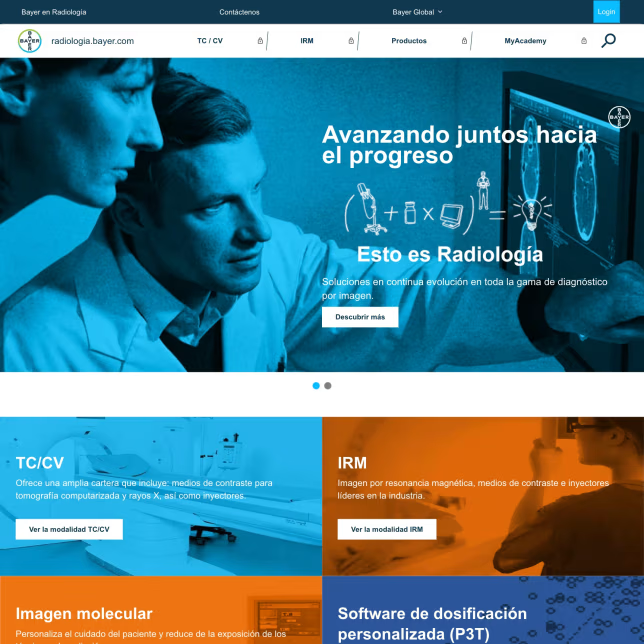
An advanced healthcare digital platform for LATAM was required to facilitate collaboration among radiology HCPs, distribute company knowledge, refine treatment methods, and streamline workflows. The solution needed secure medical website role-based access restrictions based on user role (HCP / non-HCP) and geographic region.
The platform enhanced collaboration, streamlined workflows, and empowered radiology professionals with advanced tools to gain insights and optimize patient care.
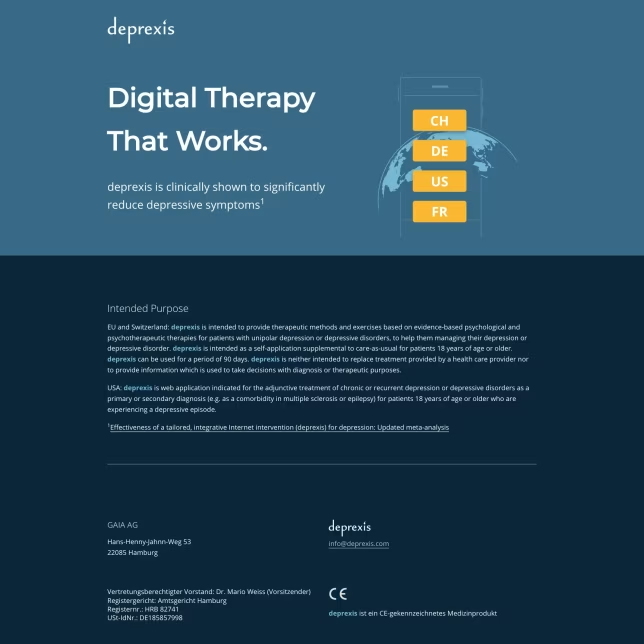
The Deprexis mental health digital platform on Drupal required stabilization, faster performance, and a secure ecommerce payment workflow to support online services. The solution needed to meet strict reliability and security expectations common for digital healthcare products.
The platform was stabilized, performance was improved, and secure checkout workflows were delivered with strong automated coverage to reduce operational and compliance risks.
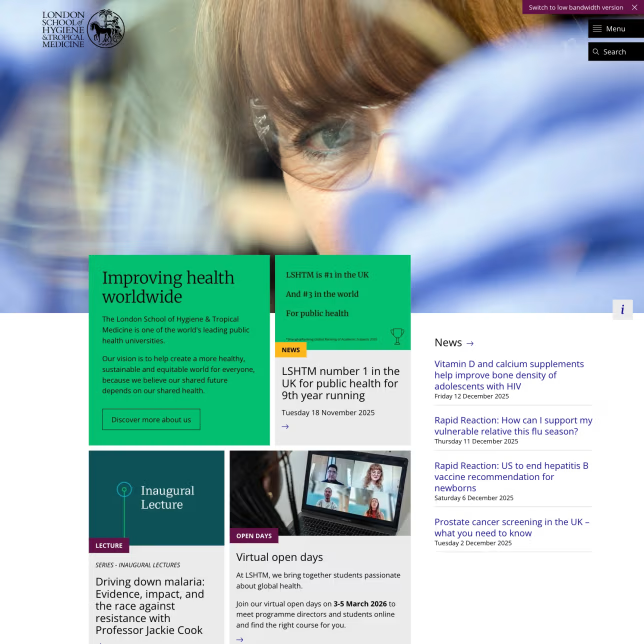
LSHTM required improvements to its existing higher education Drupal platform to better manage and distribute complex research data, including support for third-party integrations, Drupal performance optimization, and more reliable synchronization.
The solution improved data accessibility, streamlined research workflows, and enhanced system performance, enabling LSHTM to manage complex datasets more efficiently.
With Drupal 7 reaching end-of-life, Veolia needed a Drupal 7 to Drupal 10 enterprise migration for its Acquia Site Factory multisite platform—preserving region-specific content and multilingual capabilities across more than 200 sites.
The platform was modernized into a stable, scalable multisite foundation with improved performance, maintainability, and long-term upgrade readiness.
Oleksiy (PathToProject) and I worked together on a Digital Transformation project for Bayer LATAM Radiología. Oly was the Drupal developer, and I was the business lead. His professionalism, technical expertise, and ability to deliver functional improvements were some of the key attributes he brought to the project.
I also want to highlight his collaboration and flexibility—throughout the entire journey, Oleksiy exceeded my expectations.
It’s great when you can partner with vendors you trust, and who go the extra mile.

Oleksiy (PathToProject) is demanding and responsive. Comfortable with an Agile approach and strong technical skills, I appreciate the way he challenges stories and features to clarify specifications before and during sprints.

Oleksiy (PathToProject) has been a valuable developer resource over the past six months for us at LSHTM. This included coming on board to revive and complete a stalled Drupal upgrade project, as well as carrying out work to improve our site accessibility and functionality.
I have found Oleksiy to be very knowledgeable and skilful and would happily work with him again in the future.

These articles expand on the operational and governance issues that often surface during a Drupal incident. They cover recovery planning, release confidence, and the platform decisions that can either reduce outage impact or make recovery harder. Together they provide useful context for teams evaluating emergency Drupal support and incident response.
If your Drupal platform is unstable, compromised, or down, contact us immediately. We’ll help you stabilize the situation and regain control — fast.