Platform Scope

Multisite & multi-brand architectures
Enterprise Digital Experience Platforms (DXP)
Cloud-native, DevOps-driven delivery

Architecture Models

  • Headless
  • Hybrid / Decoupled
  • Traditional CMS

Enterprise Integrations

  • CRM & customer platforms
  • CDP & analytics ecosystems
  • ERP & business systems
  • Marketing automation

Content Operations

  • Governance & editorial control
  • Workflow design
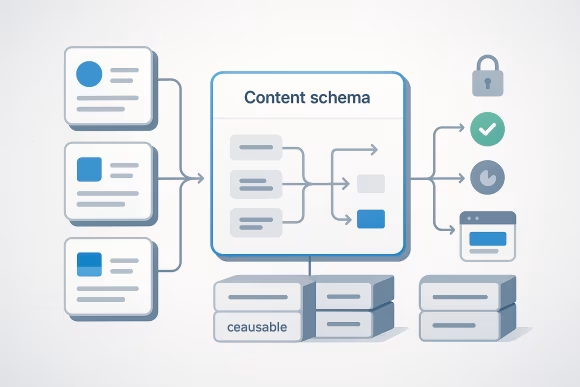
  • Structured content models

Best Fit For

  • Multi-site organizations
  • Global or multi-brand teams
  • Data-driven digital teams

When Drupal is treated like a simple CMS

Modern organizations often rely on Drupal as a powerful CMS, but as digital ecosystems grow, traditional setups begin to show strain. Multiple sites, regions, brands, and business units introduce fragmentation — duplicated components, inconsistent experiences, and disconnected content workflows. What once worked for a single website becomes difficult to scale across a portfolio of digital properties, leading to slow releases, governance challenges, and rising operational costs.

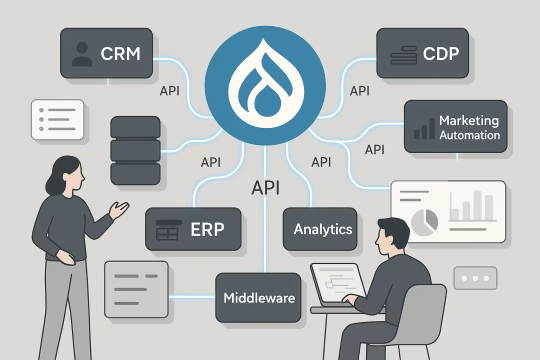
At the same time, digital platforms are no longer just content delivery systems. They must connect with CDPs, CRMs, analytics platforms, marketing automation, and external services. Without a well-designed Drupal DXP architecture, integrations become ad-hoc, performance suffers, and teams struggle to balance flexibility with stability. Technical debt accumulates, innovation slows, and marketing teams become dependent on development cycles for even small changes.

Enterprises also face growing expectations around personalization, performance, accessibility, and security. Legacy Drupal implementations often lack the architectural foundation to support headless or hybrid delivery models, cloud-native infrastructure, or modern DevOps practices. The result is a platform that works, but does not empower business growth — limiting scalability, slowing time to market, and making digital transformation harder than it should be.

Our Drupal DXP Approach

Drupal DXP Architecture Design

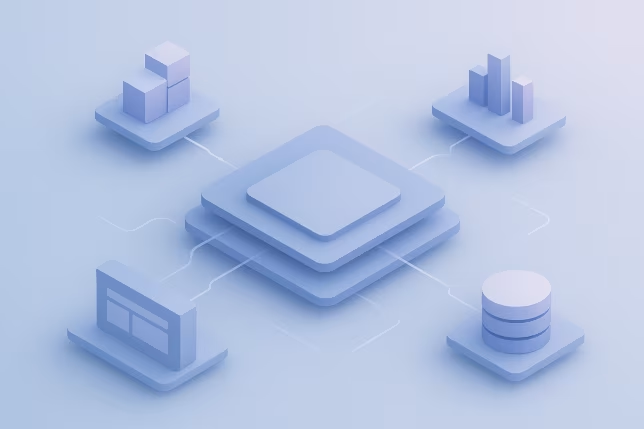
We design scalable Drupal DXP architectures that support multisite, multi-brand, and multi-region ecosystems while keeping governance, performance, and maintainability under control.

Content Model & Governance

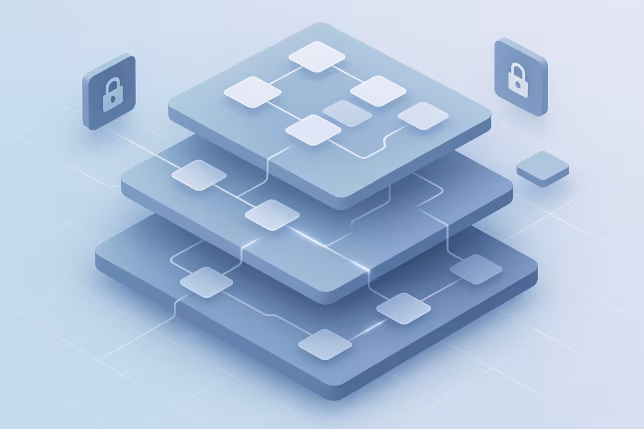
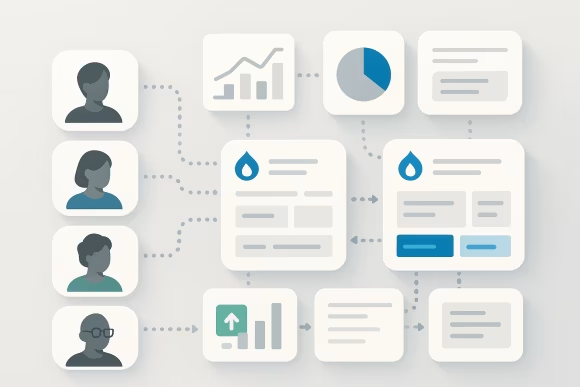
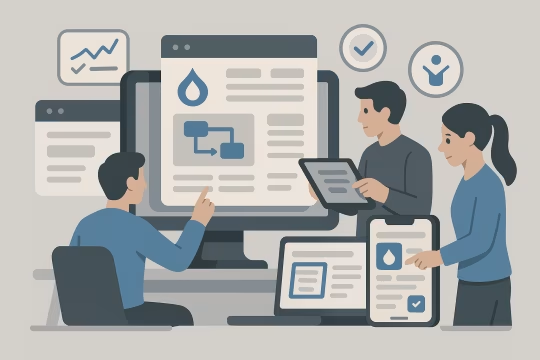
We create structured content models, editorial workflows, and governance frameworks that allow distributed teams to collaborate efficiently without losing consistency or quality.

Headless & Hybrid Delivery

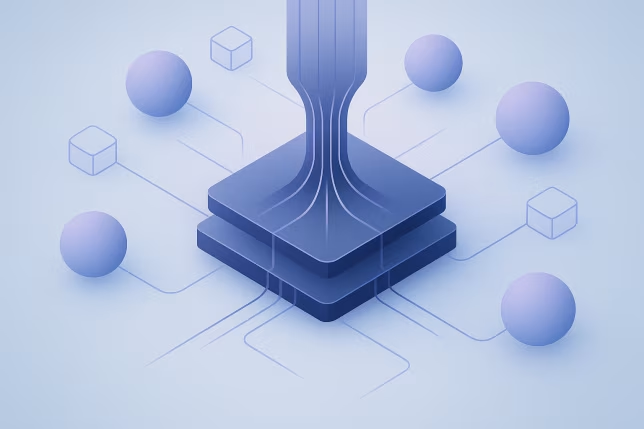
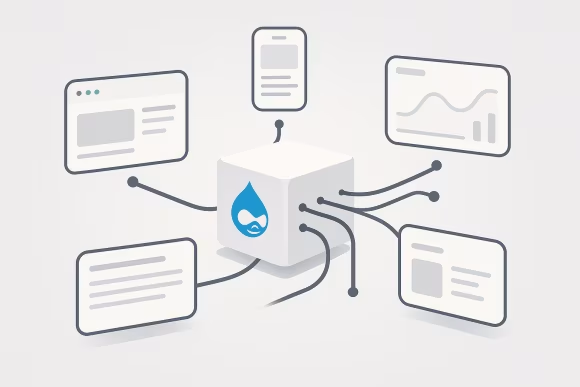
We enable Drupal headless DXP and hybrid delivery so Drupal can power websites, mobile apps, and third-party platforms through modern APIs and frontend frameworks.

Drupal CMS + DXP Integration

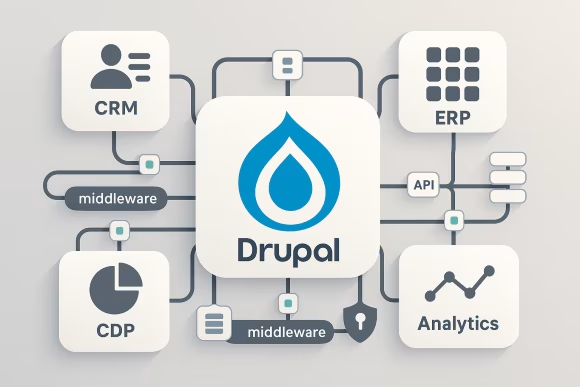
We implement Drupal CMS + DXP integration with CDPs, CRMs, marketing automation, analytics, and business systems to create a unified digital experience and data flow.

Cloud & DevOps Enablement

We implement cloud-native infrastructure, CI/CD pipelines, and automated quality checks to accelerate releases and ensure platform reliability.

Performance & Experience Optimization

We optimize caching, delivery architecture, accessibility, and UX foundations to ensure fast, inclusive, and high-performing digital experiences at scale.

Core Drupal DXP Architecture Capabilities

Drupal DXP architecture provides a structured, scalable foundation for complex enterprise environments. It combines a governed content model, Drupal multi-site platform patterns, API-first Drupal architecture, and enterprise integrations into a cohesive experience platform for distributed teams.

A composable approach allows Drupal to operate as a central experience layer while supporting headless and hybrid delivery across brands, regions, and channels. Workflow controls, security hardening, and performance strategies help maintain reliability, compliance, and operational clarity as the platform evolves.

Platform Capabilities
  • Content governance & editorial workflows
  • Personalization-ready architecture
  • Integration with CDP, CRM, and marketing stacks
  • Localization & multi-language frameworks
  • Accessibility and compliance standards
Who This Is For
  • Global brands with multiple websites
  • Enterprises with complex content operations
  • Organizations modernizing legacy CMS platforms
  • Marketing and digital teams needing governance and scale
Technology Ecosystem
  • Drupal 10/11/12+
  • Symfony-based architecture
  • GraphQL / REST APIs
  • Next.js or other headless frontends
  • Cloud hosting (AWS / GCP / Azure)
  • CI/CD & DevOps automation

How We Deliver Drupal DXPs

Our Drupal DXP delivery model follows a clear engineering sequence from discovery and platform audit through architecture design, implementation, and long-term evolution. We align Drupal experience platform development with governance, API-first integration patterns, and operational requirements so the platform remains maintainable as teams, channels, and integrations grow.

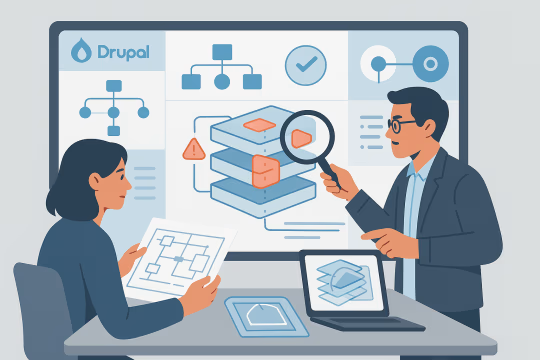
Delivery card for Discovery & Platform Audit[01]

Discovery & Platform Audit

We perform a structured assessment of your current digital ecosystem — including architecture, content structure, workflows, integrations, hosting setup, and performance profile. This phase identifies bottlenecks, risks, and scalability constraints, and results in a prioritized transformation roadmap aligned with your business goals.

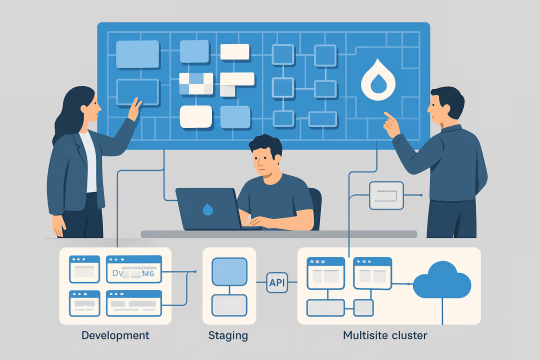
Delivery card for DXP Architecture Design[02]

DXP Architecture Design

We design a future-ready Drupal architecture tailored to your organizational complexity. This includes multisite strategy, environment structure, integration layers, caching strategy, security boundaries, and long-term scalability planning to support sustainable growth.

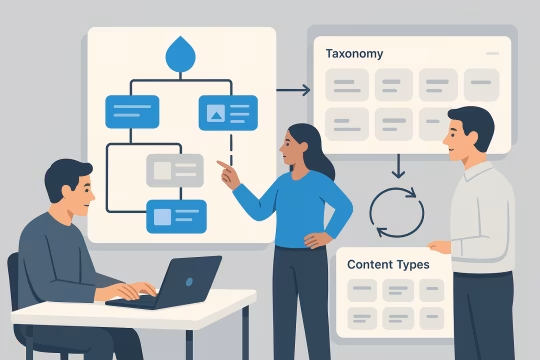
Delivery card for Content Model & Governance Setup[03]

Content Model & Governance Setup

We define structured content types, taxonomies, editorial workflows, permissions, and governance policies to ensure operational efficiency and content consistency. This enables scalable publishing across teams, regions, and brands.

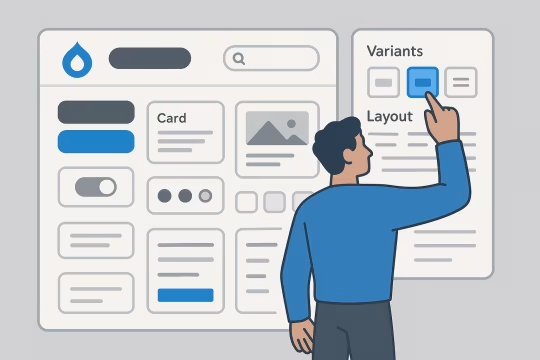
Delivery card for Design System & Component Library[04]

Design System & Component Library

We implement a reusable component architecture and structured design system to accelerate development and maintain UI consistency. Modular components reduce duplication, improve maintainability, and enable rapid iteration across digital properties.

Delivery card for Integration & API Layer Implementation[05]

Integration & API Layer Implementation

We connect Drupal with CRM, CDP, ERP, marketing platforms, and internal systems, creating a unified data layer across your digital ecosystem. Our integration approach ensures secure, reliable, and scalable data exchange.

Delivery card for Frontend & Experience Development[06]

Frontend & Experience Development

We build high-performance web and headless experiences using modern frontend frameworks and accessibility best practices. The result is fast, responsive, and user-centered digital journeys across devices and channels.

Delivery card for Performance, Security & QA[07]

Performance, Security & QA

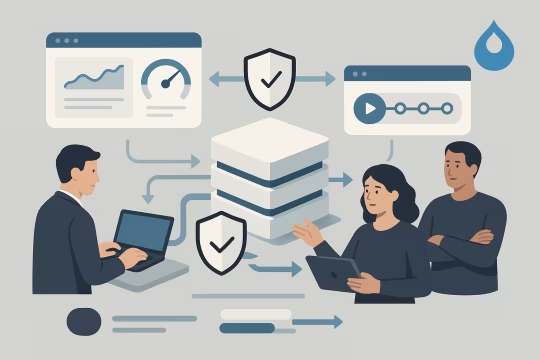
We optimize infrastructure, caching layers, and deployment workflows while enforcing enterprise-grade security practices. Automated and manual testing ensures platform stability, reliability, and measurable performance improvements.

Delivery card for Launch, Enablement & Continuous Evolution[08]

Launch, Enablement & Continuous Evolution

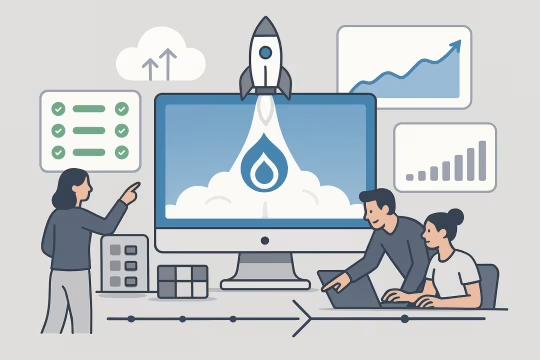
We support controlled go-live processes, team enablement, and operational documentation to ensure a smooth transition. Post-launch, we establish continuous optimization, feature delivery, and long-term platform evolution strategies.

Business Impact

By consolidating multiple brands and channels into a unified Drupal enterprise digital platform, organizations reduce duplication, operational complexity, and long-term maintenance costs. Shared governance and a Drupal multi-site platform foundation can accelerate content delivery while preserving brand control and compliance standards.

API-first Drupal architecture and Drupal CMS + DXP integration support faster iteration across marketing, commerce, and enterprise systems, while performance and security engineering reduce operational risk. For executive stakeholders, this translates into predictable scalability, improved time-to-market, and a platform that can evolve without repeated re-platforming.

Faster Content Delivery

Structured content architecture and reusable components reduce editorial friction, enabling faster publishing cycles across brands, regions, and channels without sacrificing governance or quality control.

Lower Long-Term Costs

A shared multisite foundation eliminates redundant builds, duplicated infrastructure, and fragmented tooling. Centralized governance and standardized deployment workflows reduce maintenance overhead and operational complexity.

Better Digital Governance

Clearly defined roles, approval workflows, and lifecycle controls ensure accountability across distributed teams. This reduces compliance risk and improves coordination between marketing, product, and technical stakeholders.

Future-Ready Architecture

API-first and composable architecture allows seamless integration with CRM, CDP, ERP, and emerging technologies. The platform evolves alongside your digital ecosystem without requiring disruptive re-platforming efforts.

Drupal DXP – Frequently Asked Questions

Enterprise Drupal Digital Experience Platforms require structured architecture, disciplined governance, and deep integration capabilities. A DXP is not a single website but a coordinated digital foundation that connects content, data, workflows, and customer journeys across multiple channels. The following questions address architectural decisions, scalability, multisite complexity, headless delivery models, integration strategies, and long-term platform sustainability. They clarify how Drupal DXP implementations are structured to support enterprise growth without sacrificing performance, governance, or maintainability.

What does Drupal DXP architecture include at an enterprise level?

A Drupal Digital Experience Platform architecture typically includes a structured content model, multisite strategy, API-first delivery layer, integration framework, governance workflows, and scalable cloud infrastructure. At an enterprise level, the platform must support multiple brands, regions, languages, and distributed teams. This requires configuration management discipline, environment separation, security hardening, and performance engineering. The goal is to treat Drupal not as a standalone CMS, but as a governed digital foundation capable of orchestrating content, data, and experience across multiple systems.

How does Drupal DXP support multisite and multi-brand ecosystems?

Drupal DXP enables centralized codebases with site-specific configuration layers, allowing multiple websites to operate from a shared architectural foundation. This reduces duplication while maintaining brand flexibility and regional autonomy. Multisite governance ensures consistent content models, reusable components, and shared deployment workflows. At the same time, local teams retain controlled customization capabilities. This balance between central control and distributed flexibility is critical for enterprises managing dozens or hundreds of digital properties.

Is Drupal DXP limited to traditional CMS delivery, or does it support headless and hybrid models?

Drupal DXP supports traditional CMS delivery, headless architectures, and hybrid approaches. The platform can expose structured content via REST, JSON:API, or GraphQL to power modern frontend frameworks, mobile applications, and third-party digital channels. Hybrid models allow organizations to maintain editorial convenience while enabling decoupled frontend performance and flexibility. This architectural flexibility ensures the platform can evolve alongside changing digital experience requirements without full re-platforming.

How are CRM, CDP, ERP, and marketing systems integrated into a Drupal DXP?

Enterprise integrations are implemented through structured API contracts, middleware layers, or event-driven architectures. Data synchronization rules, authentication boundaries, and monitoring mechanisms are clearly defined to ensure reliability and governance. Rather than creating ad-hoc connectors, Drupal DXP integrates systems within a controlled architectural framework. This approach ensures data consistency, reduces duplication, and supports personalization, analytics, and cross-system automation without introducing operational instability.

How does Drupal DXP maintain governance across distributed editorial teams?

Governance is enforced through structured content models, role-based permissions, and multi-stage approval workflows. These mechanisms ensure consistency while allowing distributed teams to collaborate efficiently. Auditability, content lifecycle controls, and structured taxonomies reduce duplication and maintain quality standards. This governance framework is essential for enterprises operating across regions, regulatory environments, and brand portfolios where content accuracy and compliance are critical.

What risks should organizations consider when transitioning to a Drupal DXP architecture?

The primary risks include underestimating integration complexity, migrating inconsistent content models, and failing to align infrastructure with performance requirements. Without structured planning, transformation initiatives can introduce instability or operational disruption. A phased architecture strategy mitigates these risks by defining clear scope, validating integrations early, and testing performance under realistic load conditions. Governance alignment and stakeholder coordination are equally important to ensure a controlled and predictable transition.

How does Drupal DXP handle high traffic and global scalability requirements?

Scalability is achieved through layered caching strategies, CDN integration, cloud-native infrastructure, and optimized database performance. Multisite and headless deployments can be independently scaled based on traffic patterns. Infrastructure planning includes autoscaling policies, environment isolation, and performance monitoring. This ensures the platform remains stable during marketing campaigns, product launches, and seasonal traffic spikes without compromising reliability.

How is long-term maintainability ensured in a Drupal DXP implementation?

Maintainability depends on disciplined dependency management, modular architecture, standardized deployment pipelines, and continuous documentation. Composer-based workflows and environment parity reduce upgrade friction. Governance models are designed for long-term evolution rather than short-term delivery. This includes version control discipline, automated testing, and integration monitoring. A structured DXP foundation allows incremental modernization instead of disruptive rebuild cycles.

How is security addressed in enterprise Drupal DXP environments?

Security is embedded across application, infrastructure, and governance layers. This includes regular core and module updates, role-based access controls, environment isolation, and hardened configuration management. Integration endpoints are secured through authentication protocols and encrypted communication. Compliance considerations such as data protection, audit logging, and content governance are incorporated into architectural decisions to reduce exposure and operational risk.

What is the first step in starting a Drupal DXP transformation?

Engagement typically begins with a structured discovery and platform audit. This phase evaluates current architecture, integrations, content structure, infrastructure, and operational workflows. Based on this assessment, a prioritized transformation roadmap is defined. Clear scope, governance alignment, and phased execution planning ensure that platform modernization is controlled, measurable, and aligned with long-term business objectives rather than isolated feature delivery.

Related Drupal Digital Experience Platform Projects

What Clients Say About Our Drupal Platforms

Let’s design your Drupal platform the right way

If Drupal is part of your future digital architecture, let’s make sure it’s built as a scalable enterprise platform — not just another website.

Oleksiy (Oly) Kalinichenko

Oleksiy (Oly) Kalinichenko

CTO at PathToProject

Do you want to start a project?