Disconnected Systems Slow Down Growth
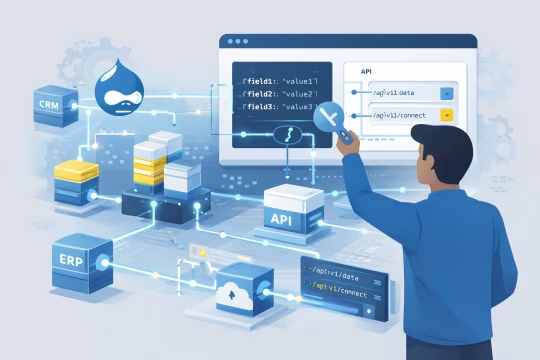
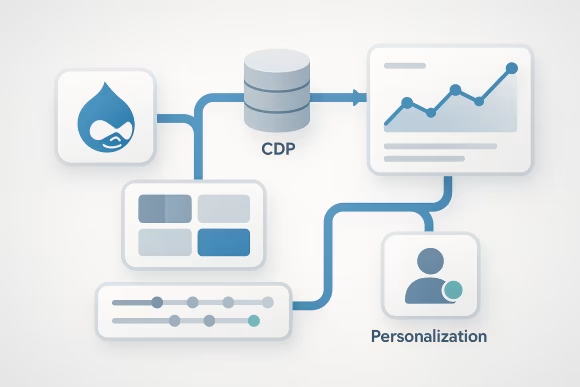
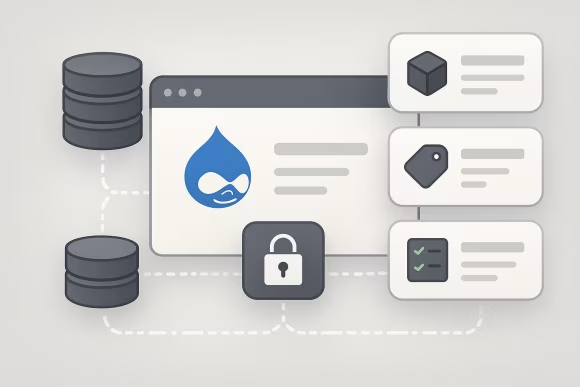
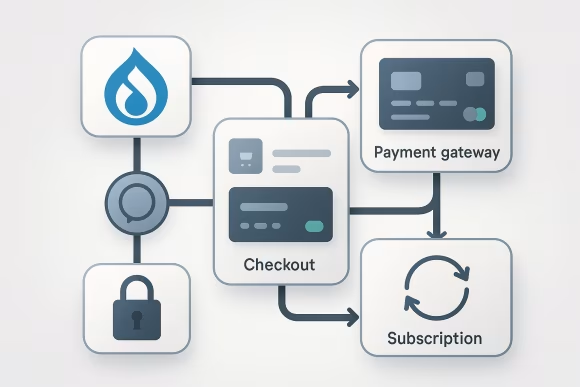
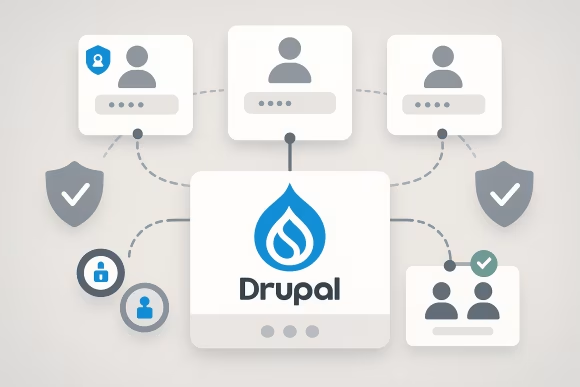
Enterprise Drupal programs often depend on a growing set of systems—CRM, ERP, CDP, analytics, identity, commerce, and marketing automation—each with its own data model, lifecycle, and operational constraints. When these systems are connected through ad hoc point-to-point links or inconsistent APIs, integration behavior becomes difficult to reason about and even harder to change safely. Teams lose clarity on system-of-record ownership, field mappings drift over time, and reporting becomes unreliable as the same entities are represented differently across platforms.
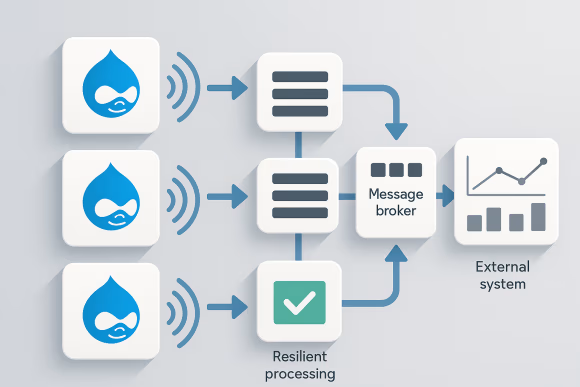
As integration scope expands, performance and reliability issues surface: synchronous calls introduce latency into user journeys, batch jobs create stale data windows, and failures can silently cascade across dependent workflows. Without a coherent Drupal API integration architecture and clear contracts, organizations accumulate hidden maintenance overhead—custom connectors, brittle transformations, and duplicated logic spread across codebases. This increases operational risk, slows delivery, and makes governance and security controls harder to enforce consistently.
The result is a fragmented ecosystem where Drupal cannot reliably participate in enterprise processes such as lead-to-cash, identity lifecycle management, or personalization. Manual reconciliation, duplicated records, and inconsistent customer profiles degrade experience and reduce confidence in the platform’s data. Over time, integration complexity becomes a delivery bottleneck that limits modernization and makes future system changes disproportionately expensive.





 [01]
[01]